
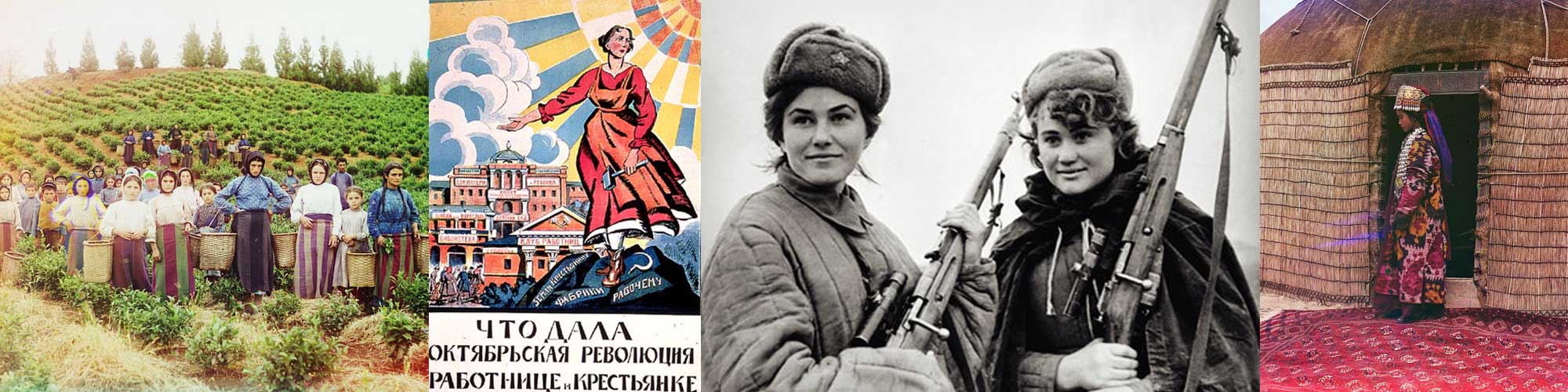

We are committed.
The Association for Women in Slavic Studies is dedicated to the promotion of research and teaching in Slavic, East European, and Eurasian women's, gender, and sexuality studies, and to the support of scholars who identify as women or LGBTQIA.
Become a Member.
We welcome those of any gender identity who study women, gender, and sexuality in Slavic and Eurasian studies, as well as women working in any field pertaining to the region.
Membership rates are as follows:
Lifetime Membership // $400 (one time)
Graduate Student / Low Income // $15 Annually
Salary is LESS than 30K/year // $30 Annually
Salary is MORE than 30K/year // $40 Annually
Contributor // $55 Annually
Friend of AWSS // $100 Annually
Institutional Membership // $100 Annually
News
Congratulations to 2023 AWSS Prizes and Grants Announcements
Each year AWSS awards a number of prizes and grants to our members.
Please join us at the Association for Women in Slavic Studies Annual Reception and Awards Ceremony Fri, December 1, 7:00 to 9:00pm EST (5:00 to 7:00pm MST), Philadelphia Marriott Downtown, Floor: 5th Floor, Salon E for the awards presentation. Or by Zoom Meeting: https://unm.zoom.us/j/93009244568 Meeting ID: 930 0924 4568; Passcode: 68196
- Mary Zirin Prize for Independent Scholars of Slavic Studies
- AWSS Patricia Herlihy Graduate Research Prize
- AWSS Outstanding Achievement Award
- AWSS Barbara Heldt Prizes
- AWSS Graduate Essay Prize
- AWSS Undergraduate Prize
Statement From the Board in Response to the Ongoing Russian War on Ukraine (August 2023)
The Association for Women in Slavic Studies (AWSS) continues to deplore and to condemn Russia’s horrific and ongoing war on Ukraine. Our institutional mission remains unchanged. AWSS is dedicated to promoting research and teaching in Slavic, East European, and Eurasian women’s, gender, and sexuality studies, and to the support of scholars who identify as women or LGBTQIA. We are committed to the study of this multinational, multi-confessional, and multiethnic region across various disciplines and support all scholars who wish to improve the general public’s understanding of women, gender, and sexuality and are committed to challenging sexist, homophobic, transphobic, racist, classist, ableist, and ageist structures that reproduce injustice.
AWSS recognizes that funds for scholarship and research in our field have for many years often been disproportionately allocated to the study of Russia and the Russian imperial project. We believe that it is necessary also to allocate funds in support of scholarship on the diverse communities (national, ethnic, or otherwise defined) that at one time or another have been part of Eastern European, Russian, or Soviet imperial space. AWSS will continue to prioritize its own funding to support those scholars who are at the greatest risk and who share our mission. Statement from February 2022: The Association for Women in Slavic Studies (AWSS) condemns the recent Russian invasion of Ukraine
AWSS is Community.
“Hidden Histories:
Reshaping Canons, Reimagining Archives, Making Gender Visible”
Dedicated to the Late Mary Zirin
June 6-8, 2024
(in person and virtual)
Hosted by the Slavic
Reference Service t the University of Illinois, Urbana-Champaign
(UIUC)
We foster community through regular gatherings at annual and biennial conferences, collaboration with other affiliate organizations, frequent communication through our listserv as well as informal networking opportunities. We also connect with our members via social media. Please find us on Facebook, Twitter, and Instagram.
Read the current issue of Women East-West
Herlihy Prize Fundraising
In 2020 AWSS launched a fundraising effort to support a graduate research prize in honor of Patricia Herlihy and her incredible contributions to both the study of Ukraine as well as her support for multiple generations of scholars across disciplines engaged in study on Ukraine and its neighbors. Please consider making a donation to support the future of the field and honor the memory of a scholar who did so much to shape the field and her discipline. Select the Herlihy Prize For Graduate Research option on the drop-down menu through the Paypal link below.
Already a Member?

awss prizes and awards

AWSS awards prizes to scholars at all stages of their careers. We support the work of individuals who embody our organization's values and mission each year through the following awards.
- The Graduate Research and Graduate Essay Prizes are awarded to scholars at the beginning of their careers.
- The Mary Zirin Prize recognizes independent scholars.
- The Outstanding Achievement Award is given to senior scholars for their mentoring and scholarship.
- The Heldt Prizes recognize outstanding books and articles in several categories.